Another OSin one window.
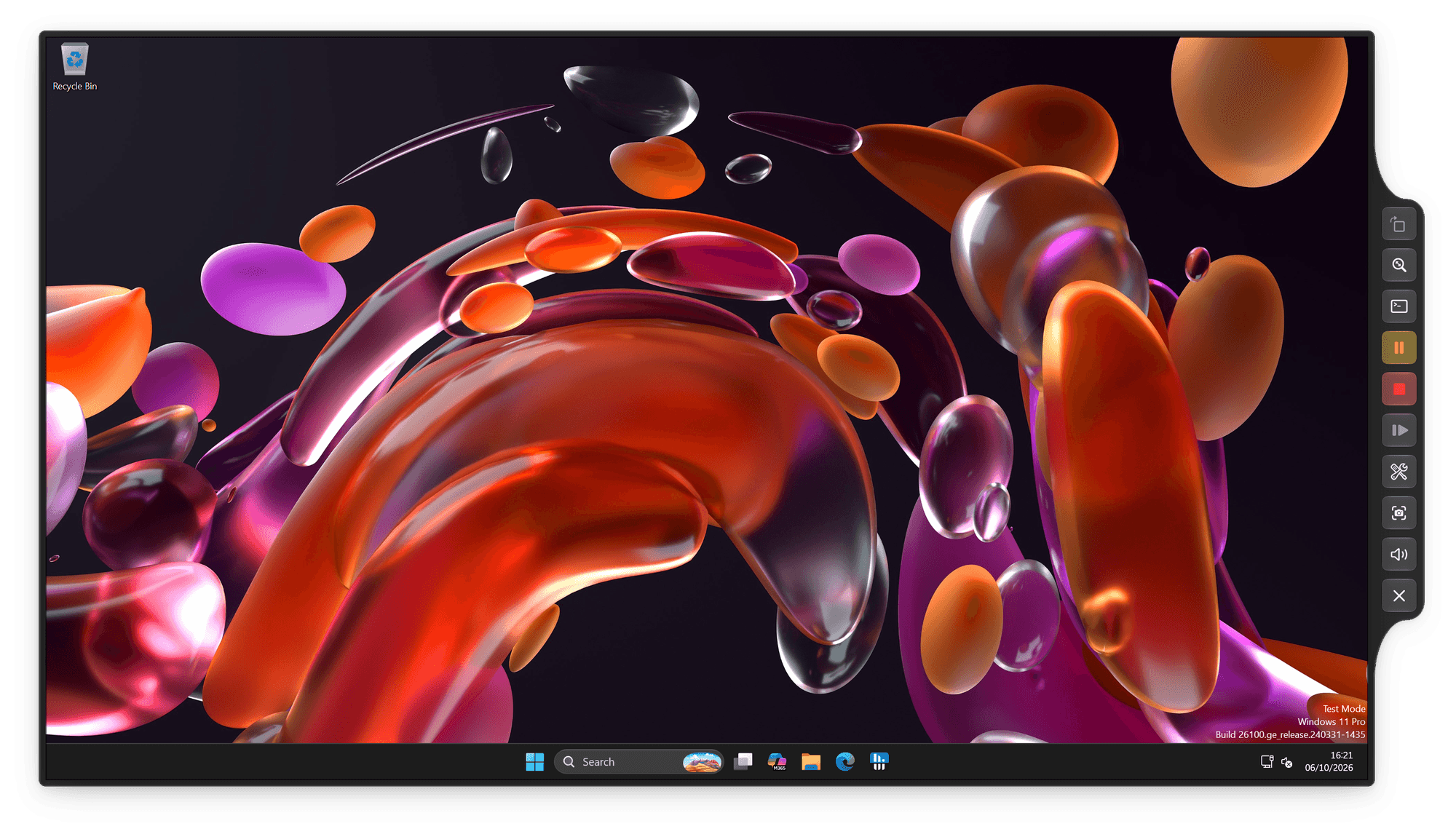
Boot Windows, Linux or BSD guests from one window. Snapshot and rewind a guest, and with Pro, stop the whole machine and see what it was doing.
- Snapshots
- Rewind and fork a guest
- Hosts
- Apple siliconNextIntel, AMD and non-Apple hosts, coming soon
- Debugger (Pro)
- Registers, memory, MMIO, interrupts
- Licence
- From £50Perpetual per major release.
Define a hardware profile once.
Then run guests built for x86_64, aarch64 or arm64e, without a separate emulator for each architecture.
What you can do with a guest
Break the guest, then go back.
Checkpoint the whole machine (RAM, devices and clocks) and return to any point. Pause a Windows install mid-driver, fork a Linux boot, or bisect a guest kernel panic without rebuilding the VM from scratch.
A guest desktop you can work in.
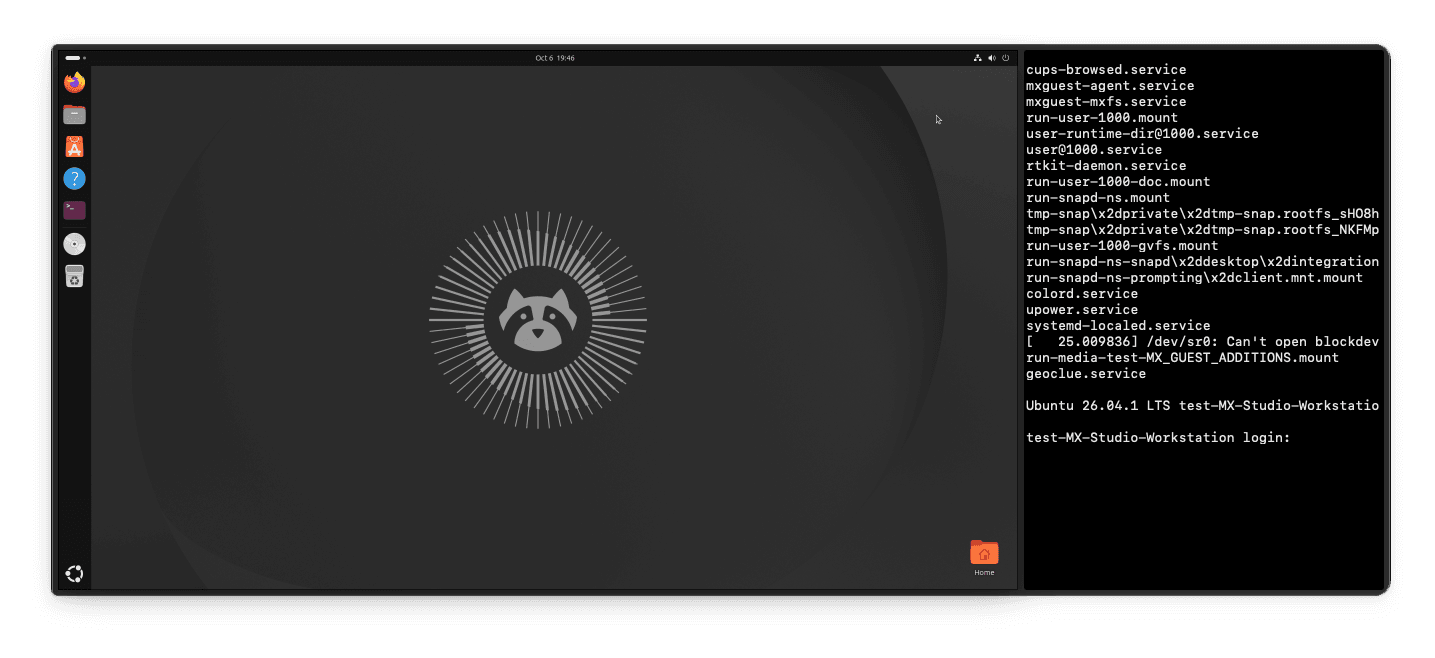
Install guest additions on a Windows or Linux guest. They give you Integrate, which puts the guest's own applications on the host desktop, and a paravirtualised graphics driver that keeps the display accelerated. A guest that has to stay stock can use virtio-gpu instead.
The debugger works on a stock guest.
Nothing needs installing in the guest first. Break on a port write or an interrupt rather than a guest address, single-step from there, and keep the same tools whether the guest is in hypervisor mode or being translated. The debugger comes with Pro, along with Mask, which edits SMBIOS on every device, and Extensions. Base has no hardware debugger or Mask.
How a guest runs, and what it can reach.
Hypervisor mode when the architecture matches
Same-architecture guests run on the host's own virtualisation extensions, through KVM on Linux and Hypervisor.framework on macOS. Cross-architecture guests fall to the translation engine, with the same machine models, devices, and debug controls either way.
Two translation paths
Hot blocks translate straight between aarch64 and x86_64 for speed. Everything else lowers to IR, is optimised and verified, then JITs. Both routes emit through the same backends, so the fast path cannot quietly drift from the slow one.
Passthrough
MX Studio can assign a real USB or PCIe device to a guest, with an IOMMU policy for the VM. The guest loads the vendor driver, and the host cannot use that device while it is assigned.
Early Access
Apple silicon only for now
MX Studio is in Early Access. Builds move quickly, features are still landing, and you should expect bugs.
Your licence is not capped at one major release. It carries straight through to the full public release at no extra cost.
Licensing
MX Studio licences are perpetual for a major release. A new licence includes the latest major release and remains valid indefinitely for it; upgrading to the next major costs the same as a new licence.
Base
£50/ Major Release
Run and manage VMs with standard system limits. No hardware debugger or Mask.
- VM create / manage / destroy
- Standard CPU, RAM, and disk limits
- Standard hardware profiles
- All architectures
- Basic support
Pro
£100/ Major Release
Hardware-level debugging, Mask, Extensions, higher limits, and priority support, including demanding Windows guests.
- Everything in Base
- Hardware-level debugger
- Mask, editable SMBIOS on every device
- Extensions
- Higher system limits
- Priority support
Enterprise
Contact
Remote fleet management, custom limits, SLAs, and dedicated onboarding, with optional increased capabilities for security research.
- Everything in Pro
- Optional increased capabilities for security research
- Remote management
- Custom hardware catalogues
- Volume licensing
- Next-major upgrades at a reduced price
- Dedicated support
MX Studio is currently in Early Access. Every Early Access licence carries through to the full public release at no extra cost, not only the current major release.